Automation blog
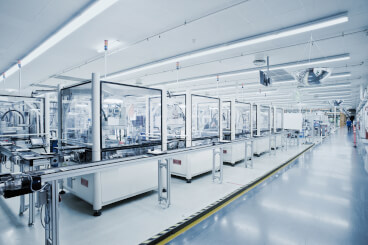
End of Line Automation: Now is the Time!!
29 March, 2022 By Stuart Coulton, Market Development Manager, OMRON UK
Traditional factories have data needs too
18 March, 2022 The right tools and tech can enable advanced predictive maintenance, bottleneck prevention and optimization. Find out how digitalization is bridging the gap between legacy systems and Industry 4.0.
Fuel for the future: What to look out for in fuel cell production
10 March, 2022 When people talk about sustainable mobility, the first thing that comes to mind is battery-powered e-cars. Fuel cells or direct hydrogen burners are complementary technologies that often fade into the background, yet have a lot to offer when it comes to CO₂ reduction and market options.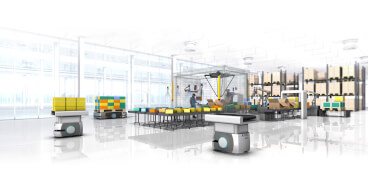
Mastering packaging and intralogistics challenges in eCommerce
24 February, 2022 Robot-assisted packaging enables fast and cost-efficient scalability upward and downward to handle swings in demands from the supply chain.
Green packaging industry: How to achieve sustainable manufacturing
09 February, 2022 Sustainability in the packaging industry is one of the key aspects in fighting the plastic waste issue and ultimately climate change. The challenges that this presents, require flexible and powerful automation technology.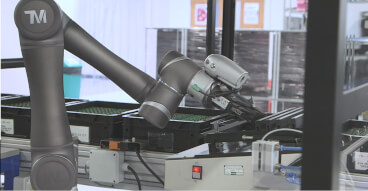
Hanover Displays automates PCBA testing with cobots
31 January, 2022 UK-based Hanover Displays Limited needed a new system for testing printed circuit board assemblies (PCBAs) and selected OMRON TM cobots for the job, supplied and installed by Absolute Robotics, part of the Absolute Automation Group.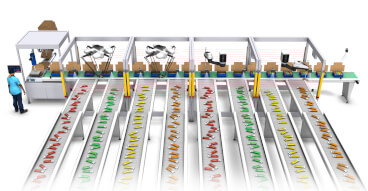
Five challenges in High-Mix, Low-Volume (HMLV) packaging and palletizing processes
21 December, 2021 The new product has just left the factory, in a shelf-ready package in the specified mixed ratio to meet customer needs. The packaging has actually been handled by another company: a co-packer. Co-packing can be found in all Fast-Moving Consumer Goods (FMCG) markets, but especially in the higher-priced product segments such as personal care or confectionery, to name a few examples. It is a fast-growing activity to satisfy the consumer demand for more variety.
Productivity Peaks: Moving Maintenance From Preventive to Predictive
17 December, 2021 Maintenance is a vital key to a thriving business, especially in manufacturing where 24/7 plant equipment uptime is often expected as standard. As any established enterprise knows, keeping production lines and systems running optimally requires more than a skilled maintenance team. It also involves careful planning, tight scheduling, constant vigilance, a willingness to change out unworn parts, and a readiness to respond to unplanned events. At least, it used to.
Rethink your Company’s Intralogistics Approach with Autonomous Mobile Robots (AMRs)
09 December, 2021 Intralogistics refers to the management and movement of materials and goods within a facility, and whether it is a warehouse, distribution centre, factory, or another production facility, it can be a significant hurdle to overcome. But by investing significant time and effort into your facility’s intralogistics, you can:
How Automating Tasks like Case Packing is the Logical Response to Record Vacancies
02 December, 2021 The UK is experiencing significant labour shortages across multiple industries. Brexit combined with the pandemic led to total UK job vacancies passing 1 million for the first time on record, and the food industry is one of the hardest-hit sectors. A lack of staff to call upon puts considerable strain on our food supply and creates headaches for employers around the country.Within the food industry, much of the focus has been on the shortage of lorry drivers and how this is causing higher food prices. However, a lack of staff is being felt across the industry in production, fruit/veg picking, packaging, and more.Strict travel restrictions due to Covid combined with Brexit means jobs previously performed by overseas workers remain unfilled. Plus, the pandemic and a break from the usual work cycle lead many people to re-evaluate their profession and look for careers that offer them increased flexibility and autonomy over when and where they work.A significant portion of the food industry vacancy problems is in less desirable positions that are low wage and physically demanding. Fortunately for employers, many of these jobs are ideal candidates for automation. Case packing is a great example of this.
Finished seals in less than 10 seconds: Robotics Integrated Controller ensures harmonious control
24 November, 2021 Trelleborg Livorno has updated a robotic cell for the finishing of polyurethane gaskets for the sustainable wind energy market. The cornerstone of the solution is OMRON's Robotics Integrated Controller that ensures integration and synchronization of all automation components, including robots, logic, motion, safety and user interface.