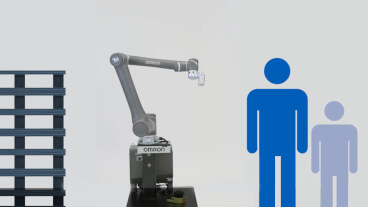
Automation blog
Factory automation: four tips for the future of food & beverage manufacturing
16 July, 2020 The coronavirus pandemic has posed major challenges to organisations of all types and sizes. In the food and commodity industry, companies have faced significantly reduced consumption and disrupted supply chains, while at-home consumption increased, and out-of-home consumption came near to a standstill. But how can manufacturers adapt their business strategies and production processes both now and in the longer term? The pandemic may provide an opportunity for rethinking outdated processes and procedures and enhancing them with concepts such as innovative robotics, sensor technology and holistic automation strategies.
Get the full value from your factory floor data with data sciences
19 June, 2020 Industry 4.0 and IIoT have been buzz words for several years and these concepts are actually implemented on more and more machines. A huge amount of data becomes available: machine data, data of the production process and data regarding the manufactured product. Big Data has entered the factory floor.
Zero-defect philosophy helps resolve the world’s future issues
05 June, 2020 Imagine the city center of a modern metropolis in 2030: a multitude of unmanned, electrically-powered vehicles driving swiftly and silently through the streets. These vehicles sense traffic lights and other road signs and make decisions using artificial intelligence. They avoid people, who unexpectedly cross their path. They detect and avoid dangerous situations before they occur. And they contribute to everyone’s health and safety. But what happens if the associated electrical systems fail? Omron is already addressing this problem today.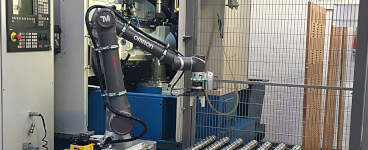
Cobots give gear manufacturer a competitive production edge
14 May, 2020 Danish gear manufacturer, Fischer Gears, has boosted the competitiveness of its production process - especially on larger series – by installing two OMRON TM robots. The collaborative robots (cobots) free experienced employees to focus on more value-adding tasks.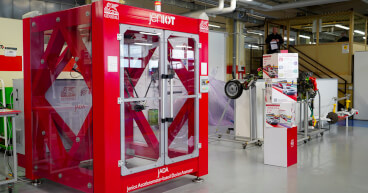
High-speed robot tests the reliability of black boxes
14 May, 2020 A non-destructive alternative to crash tests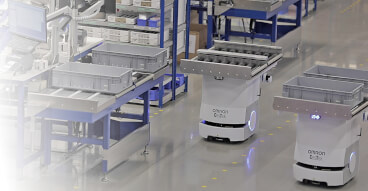
Made-to-order production with an advanced fleet of mobile robots
11 May, 2020 VOLA, a Danish manufacturer of luxury sanitary and kitchen fittings, has opened a new factory that incorporates a fleet of nine mobile robots from Omron.
Energizing European battery cell production
01 May, 2020 What can European automotive companies do to future-proof their production lines, especially in relation to battery manufacturing? Robotics, automated quality control and artificial intelligence (AI) can help companies to tackle the strong competition they are facing from Asia.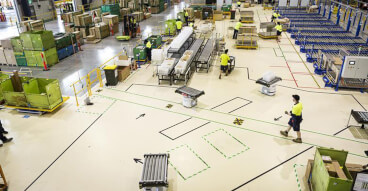
Mobile robots smarten up Toyota’s new parts centre
28 April, 2020 Intelligent robots and sophisticated design are helping Toyota to achieve a higher level of efficiency at its new warehouse in Sydney, Australia.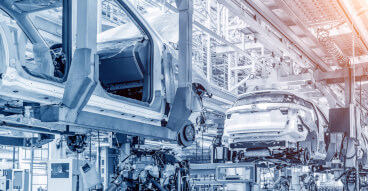
Integrated data control, motion control and machine vision for next-generation automotive production line
24 April, 2020 The Mexican regional headquarters of a leading manufacturer of premium air brake actuators for global on-highway and specialty markets required a new automated production assembly line. One of the company’s key performance indicators is to deliver a fully assembled product every 30 seconds, and it is with this end goal at the forefront that the team started the process of automating the production line.
Cobot and flexible production - Future-proofing SMEs?
17 March, 2020 Many countries in Europe, such as the UK and Germany are likely to experience serious labour shortages over the coming decade, especially in relation to technical specialists. At the same time, product lifecycles are becoming shorter. Despite this, small and medium-sized enterprises (SMEs) might be reluctant to invest in additional automation. However, collaborative robots (cobots) are easy to set up and offer a quick and cost-effective solution. They can increase the flexibility, quality and speed of production and enable companies to respond rapidly to changing market conditions. Omron’s TM series of cobots are a good example of this versatility.
ŠKODA AUTO uses LD mobile robot at Vrchlabí plant
17 March, 2020 The autonomous robot contributes to the continuous improvement of work safety in Vrchlabí and helps to minimise work risks. It recognises people crossing its path as well as other vehicles and stationary obstacles.